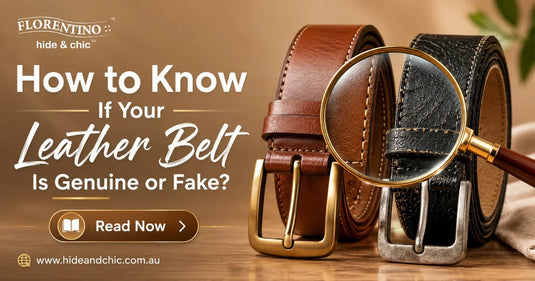
Not every belt that looks like leather is the real thing. Knowing the genuine leather belt signs helps you spot quality and avoid paying good money for a fake. Real leather looks better, lasts longer and ages with character, while fake leather often cracks and peels within months. In this guide, we explain how to identify genuine leather belt quality, the warning signs to watch for, and a few simple tests you can do yourself.
Genuine vs Fake Leather Belt: Why It Matters
The difference in a genuine vs fake leather belt comes down to how it is made. Genuine leather is real animal hide, prepared to be strong and long-lasting. Fake leather, often called PU or bonded leather, is mostly plastic made to look like the real thing.
Real leather costs more, but it rewards you. It moulds to your body, develops a rich patina and can last for years. A fake belt may look fine at first, but it usually cracks, peels and ends up in the bin much sooner.
Genuine Leather Belt Signs to Look For
When you know how to identify a genuine leather belt, the signs are easy to spot.

Natural smell: Real leather has a warm, earthy smell. Fake leather smells like plastic or chemicals.
Unique grain: Genuine leather has a natural, slightly uneven grain. No two pieces look exactly the same.
Soft, warm feel: Real leather feels soft and warms in your hand. Fake leather feels cold, stiff or overly smooth.
Visible pores and marks: Small wrinkles, pores and tiny marks are signs of real hide, not flaws.
Fibrous cut edges: The edges of a genuine belt look slightly rough and fibrous, not perfectly smooth and plasticky.
Signs of a Fake Leather Belt
It also helps to know the common signs of fake leather belt construction.
A perfect, repeating pattern: A grain that looks identical all over is usually printed plastic.
A chemical smell: A strong plastic or paint smell is a clear giveaway.
A very low price: Real leather is not cheap. A bargain belt is often not real leather.
Peeling or flaking: Fake leather peels and flakes as the thin top layer breaks down.
Misleading labels: Words like man-made or PU leather mean it is not full hide.
Quick Tests to Identify Genuine Leather
You can run a few simple checks before you buy.
The press test: Press the surface with your thumb. Real leather wrinkles and springs back. Fake leather stays smooth or creases oddly.
The water drop test: A small drop of water soaks slowly into real leather. On fake leather it sits on top.
The edge check: Look closely at the cut edge. Real leather shows natural fibres, while fake shows a foam or fabric layer.
The label check: Read the label. Honest sellers will clearly state full-grain or top-grain leather.

What Leather Belt Labels Really Mean
Labels can be confusing, so here is a quick guide from best to weakest.
Full-grain leather: The top quality. It uses the whole grain and lasts the longest. Our full-grain leather belts are made from this grade.
Top-grain leather: High-quality, lightly sanded for a smooth finish.
Genuine leather: Real leather, but a lower layer. Decent, though not the best.
Bonded leather: Leather scraps glued together. The weakest and least durable option.
Is It Worth Paying More for Genuine Leather?
Yes, in most cases. A genuine leather belt costs more upfront, but it can easily outlast several cheap belts. Instead of replacing a peeling belt every year, you buy once and wear it for years.
There is also the look and feel. Real leather softens, shapes to your body and gains a warm patina with age, while a fake belt only looks worse over time. For an everyday item you wear constantly, real leather is usually the smarter buy.
Final Thoughts
Once you know the genuine leather belt signs, telling real from fake becomes second nature. Trust your senses: smell it, press it, and look closely at the grain and edges. When you want the real thing, shop our range of quality leather belts in Australia at Hide & Chic, all made from genuine, full-grain leather built to last.
Frequently Asked Questions
1. Is genuine leather the best quality?
Not always. Genuine leather is real, but it is a lower grade than full-grain or top-grain leather, which last longer and age better.
2. Does real leather crack easily?
Good quality leather resists cracking, especially when conditioned. Cheap or fake leather cracks and peels far sooner.
3. How can I tell genuine leather quickly in a shop?
Smell it, press it and check the edges. Real leather smells earthy, wrinkles when pressed and has fibrous cut edges.
4. Is PU leather the same as real leather?
No. PU leather is a plastic coating made to look like leather. It is cheaper but far less durable than the real thing.
5. Why is genuine leather more expensive?
Real hide costs more to source and prepare, but it lasts much longer and ages well, so it is better value over time.