Luxury leather is something you don’t just see, you feel. The touch, the smell, the way it softens over time all tell a story of craftsmanship and care. Among exotic materials, few comparisons create as much curiosity as crocodile vs alligator leather. Both are known for their durability, rare beauty, and timeless appeal.
But when you are choosing a bag, belt, or travel companion, or sourcing pieces for your store, the real question becomes simple. Which leather is right for your needs?
This guide explores the differences, craftsmanship standards, sustainability practices, and buying insights shaping the industry in 2025. Whether you are a fashion lover, a loyal Hide & Chic customer, or a B2B buyer looking for premium inventory, you will find a clear and honest breakdown here with no jargon, just real guidance you can trust.
What’s the Difference Between Crocodile and Alligator Leather?

When you are out to buy travel bags, at first glance, both leathers appear similar. The difference reveals itself only through closer inspection and experience.
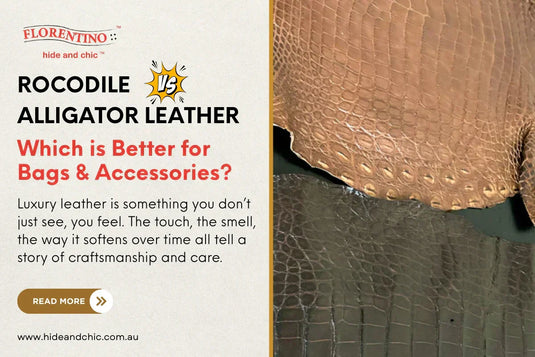
Alligator leather features smooth, uniform scales without sensory pore markings, creating a refined appearance ideal for elegant handbags and compact accessories. The belly area is prized, offering perfectly symmetrical patterning that feels clean and unmistakably luxurious.
Crocodile leather, most commonly sourced from Nile and saltwater crocodiles, carries a slightly more dynamic appearance. Each scale contains small pores, giving the surface greater character and depth. Crocodile skins also provide larger cutting panels, making them well suited for bold, larger-format designs.
The difference between crocodile and alligator leather ultimately comes down to aesthetic preference: alligator leans classic and polished; crocodile leans expressive and statement-driven.
Sustainability & Ethical Sourcing Today
Ethical luxury has become the new standard. Modern conversations around crocodile vs alligator leather focus not only on beauty, but responsibility.
All reputable suppliers now operate under international wildlife trade protections with strict breeding controls. Advanced systems track each skin from regulated farms through tanneries to retail workshops, ensuring conservation protection and legal compliance.
Environmental practices have also improved. Vegetable-infused tanning agents are replacing harsher chemicals, water recycling is standard across most production hubs, and waste-reduction technologies maximize every cut of usable hide.
Consumers and wholesale partners alike increasingly request sourcing documentation — not as an optional trust signal, but as a baseline expectation. Ethical transparency is no longer niche; it is central to modern luxury purchasing.
Which Leather is Best for Your Bag Style?

Choosing between crocodile and alligator leather isn’t just about luxury labels, it’s about selecting the right material to match your lifestyle, design goals, and how the bag will actually be used. Every bag has a purpose: some are meant to turn heads at evening events, while others must handle airport terminals, daily commutes, or retail display handling. Understanding how each leather performs across real-world applications leads to a smarter investment and stronger satisfaction.
Alligator Leather — Best for Refined, Structured Designs
Alligator leather is the embodiment of elegance. Its smooth, pore-free scales create exceptional visual uniformity, making it a top choice for bags designed to feel polished, glamorous, and classic.
If your ideal bag silhouette features stiff structure, crisp edges, or compact sizing, alligator leather enhances every detail without overpowering the design.
Alligator leather works beautifully for:
-
Luxury handbags with an architectural structure
-
Evening clutches and formal minaudières
-
Wallets, card holders, and small leather goods
-
Limited-edition statement pieces where surface perfection matters
Fashion buyers who cater to customers seeking understated sophistication often choose alligator leather because it photographs beautifully, holds its shape permanently, and carries long-term resale appeal. In boutique retail environments, it signals exclusivity and refined taste rather than bold opulence.
Crocodile Leather — Best for Bold, Practical & Travel-Led Styles
Crocodile leather is designed for presence, both aesthetic and functional. Its textured scales and natural pore markings add dimensional character, giving bags a stronger visual identity that commands attention across larger formats. Even more importantly, crocodile skins provide broader cutting panels, which allows for seamless construction in bigger bags without excessive piecing.
Crocodile leather excels in:
-
Weekender and duffel bags
-
Tote bags and oversized city carryalls
-
Crossbody travel bags
-
Designer belts and statement accessories
This makes crocodile leather ideal for customers looking to buy travel bags that feel both luxurious and dependable. Travelers gravitate toward crocodile pieces because they combine flexible strength with impact resistance, perfect for continual movement, handling, and airline storage — without sacrificing elevated style.
For wholesale buyers, crocodile leather offers production advantages due to higher usable yield per hide and consistency across bulk runs, making it more suitable for scaling collections while maintaining premium positioning.
How Long Do These Leathers Really Last?
When expertly crafted, both leathers offer exceptional longevity.
Alligator leather maintains shape beautifully and resists creasing over time, making it a favorite for high-structure pieces meant to retain pristine form.
Crocodile leather is especially resilient to handling stress and minor environmental changes. Its thicker scale architecture holds up well to travel, daily carrying, and repeated handling, perfect for bags expected to move beyond display shelves.
Realistically, properly maintained pieces from either leather routinely remain pristine for 20 to 40 years, sometimes longer. Conditioning, dry storage, and professional cleaning every few years ensure heirloom longevity.
Types of Crocodile Species and Their Leather
Not all crocodile leather is equal; species selection significantly impacts appearance and suitability.
The most commonly used premium species include:
Saltwater Crocodile
Highly sought-after for its small, symmetrical scales and minimal blemishing. Often used for luxury handbags and higher-end travel collections.
Nile Crocodile
Larger scales with pronounced texture, ideal for bold fashion accessories, weekenders, and statement designs.
Their differing textures shape the final aesthetic: saltwater skins skew elegant and uniform; Nile skins offer rugged presence and visual depth, perfect for travel pieces.
Alligator Species: What Makes Them Unique
Alligator leather is derived almost exclusively from the American alligator. Its defining feature is the absence of pores on belly scales, resulting in a smooth and highly symmetrical surface.
This uniformity lends itself to refined luxury goods where visual balance is essential. High-fashion houses value alligator for limited-edition collections where consistency, cleanness, and class appeal to sophisticated clientele.
Because usable panels are smaller and yield lower than crocodile, alligator leather typically commands a higher price, a reflection of rarity rather than superiority.
How Crocodilian Leather is Crafted

The transformation from rawhide to a luxury finished product involves numerous artisan stages:
-
Ethical sourcing verification
-
Gentle curing and tanning to protect scale integrity
-
Manual cutting to preserve pattern symmetry
-
Hand stitching with reinforced seams
-
Edge polishing and scale conditioning
-
Final inspection and certification
In top-tier workshops, this process takes weeks per batch, not days. Precision, patience, and artistic discipline define every step, ensuring every Hide & Chic accessory maintains an uncompromising standard.
What Retailers & Wholesalers Should Know
Wholesale buyers choosing between crocodile vs alligator leather often decide based on customer demographics and turnover expectations.
Retail boutiques benefit most from:
-
Alligator leather small goods with strong markup potential
-
Limited runs with seasonal color edits
-
Wholesale distributors lean toward:
-
Crocodile travel collections that scale efficiently
-
Repeatable silhouettes with strong gifting appeal
Customers searching to buy leather travel bags are driving increasing wholesale volume in crocodile leather sectors, combining functional demand with aspirational purchasing psychology.
Hide & Chic’s wholesale partnerships provide modular ordering frameworks giving buyers flexibility without compromising craftsmanship exclusivity.
Your Leather Choice Starts at Hide & Chic

-
Choosing between crocodile vs alligator leather is about matching the right leather to your lifestyle, purpose, and brand vision, not ranking luxury.
-
When you buy travel bags, prioritize durability and practical design; for boutique handbags, focus on refinement and visual elegance.
-
In every case, demand expert craftsmanship and ethical sourcing as non-negotiable standards.
-
Discover Hide & Chic’s premium exotic leather collections, curated with integrity, expertise, and timeless design.
FAQs About Crocodile Vs Alligator Leather
1. Which leather feels softer to the touch?
Alligator leather usually feels smoother and silkier because of its flat, pore-free scales, while crocodile leather has a slightly textured feel with more visible character.
2. Can crocodile or alligator leather be used every day?
Yes. Both leathers are durable enough for daily use when properly crafted and cared for, especially bags designed for regular travel or commuting.
3. How should I store exotic leather bags?
Store them in a breathable dust bag, away from direct sunlight and moisture, and lightly stuff the bag to help maintain its shape.
4. Does exotic leather change with age?
Yes. Like fine leather, both types develop a richer tone and softer feel over time, enhancing their natural beauty rather than wearing out.
5. Are these leathers suitable for wholesale and boutique collections?
Absolutely. Their premium appeal, durability, and timeless style make them excellent choices for both retail buyers and wholesale sourcing whenever you buy travel bags.