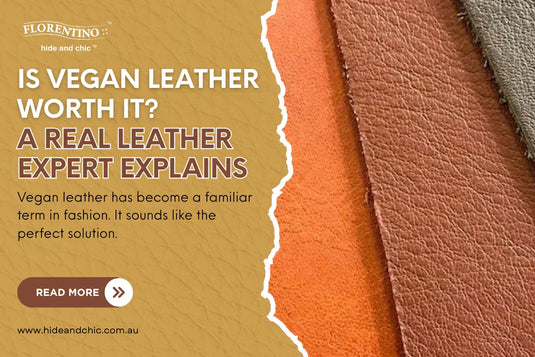
Vegan leather has become a familiar term in fashion. It sounds like the perfect solution: cruelty-free, sustainable, and stylish. But once you look closer, the story becomes more complicated. How eco-friendly is it really? How long does it last? And can it truly replace real leather?
At Hide & Chic, craftsmanship and honesty guide every product we make. Instead of repeating marketing buzzwords, we prefer to show what Vegan leather really is, how it compares to genuine leather, and whether it’s worth your money.
What Exactly Is Vegan Leather
Vegan leather is any material that looks and feels like leather but is made without animal hides. It was created to give consumers an ethical option that mimics the texture of natural leather.
Most Vegan leather available today comes from two main sources:
-
Synthetic leather is made from plastics such as polyurethane (PU) or polyvinyl chloride (PVC).
-
Plant based leather made from natural materials like cactus, mushrooms, pineapple leaves, or apple peels.
Synthetic versions are flexible, smooth, and affordable. Plant based leather brings innovation to the table and can reduce waste from agriculture. However, both versions still fall short in one area: durability. Real leather remains stronger, more breathable, and longer lasting.
How Vegan Leather Is Made
The process begins with a base fabric, usually polyester or cotton. Manufacturers then coat this base with a resin that creates a leathery surface.
-
PU leather uses polyurethane for a soft, flexible texture.
-
PVC leather uses polyvinyl chloride, which makes it shiny and more rigid.
-
Plant-based leather combines natural fibers with synthetic coatings to make the material stronger.
While these methods use fewer animal resources than traditional tanning, they often involve plastics that are not biodegradable. So even when a product is labeled eco-friendly, it may still leave behind long-lasting environmental waste.
Vegan Leather vs Real Leather

Vegan leather vs real leather remains one of the most discussed comparisons in the fashion world. Both have unique advantages, but their performance, sustainability, and lifespan differ in key ways. Understanding those differences helps buyers make smarter, long-term choices.
1. Durability and Lifespan
Real leather lasts 10–20 years when cared for properly. Vegan leather typically lasts 1–3 years before showing visible signs of wear.
2. Texture and Feel
Synthetic leather looks smooth and uniform, while genuine leather carries a natural texture and grain that develops beautifully over time.
3. Breathability and Comfort
Vegan leather tends to trap heat and lacks ventilation. Real leather breathes naturally, making it more comfortable for long-term use.
4. Environmental Impact
While Vegan leather avoids animal hides, it often contains plastics that contribute to microplastic pollution. Responsibly tanned real leather, especially vegetable-tanned varieties, is biodegradable and can be repaired instead of replaced.
5. Cost and Value Over Time
Vegan leather products are cheaper upfront, but wear out quickly. Real leather requires a higher investment but lasts decades, offering better long-term value.
Here’s How Both Materials Compare When You Put Them Side by Side:
|
Feature |
Vegan Leather |
Genuine Leather |
|
Material Source |
Synthetic or plant-based leather blends |
Natural animal hide |
|
Durability |
1–3 years on average |
10–20 years with care |
|
Feel & Texture |
Smooth and uniform |
Rich grain and warmth |
|
Breathability |
Low, traps heat |
High, adapts to temperature |
|
Aging |
Cracks and peels over time |
Develops patina and character |
|
Sustainability |
Often plastic based |
Biodegradable when naturally tanned |
The takeaway: Vegan leather works well for short-term, affordable fashion, while genuine leather is built to age gracefully, offering decades of style, comfort, and sustainability.
Understanding Plant-Based Leather
Plant-based leather is one of the most promising developments in fashion materials. It uses natural ingredients such as cactus, apple peels, or pineapple fibers to create flexible fabrics. These options reduce the need for animal hides and can lower carbon emissions.
However, the natural fibres alone are not strong enough. Manufacturers still need to mix them with polyurethane or other resins to make them durable. That means plant-based leather is only partially biodegradable. It is better than plastic-based leather, but it has not yet reached the stage where it can fully replace genuine leather.
When Real Leather is Worth the Investment

A high-quality leather product is a long-term companion. It softens, adapts, and develops a unique patina with every use.
If you use something daily, like belts, wallets, or leather tobacco pouches, real leather makes more sense. It lasts for years, can be repaired, and grows more comfortable over time. The initial investment pays off because you are not replacing the item every few seasons.
From a sustainability point of view, long-lasting materials matter. One genuine leather belt might serve you for twenty years, while several Vegan leather versions could wear out in half that time. At Hide & Chic, we see that kind of durability as the truest form of sustainability.
The Real Story About Sustainability
Many people assume Vegan leather automatically means eco-friendly. The truth is more complicated. While it avoids animal use, it often relies on plastics that contribute to microplastic pollution.
Genuine leather, when responsibly sourced and tanned with vegetable dyes, can be far more sustainable. It is biodegradable, repairable, and produced from by products of the food industry. The waste is minimal, and the product’s lifespan is long.
At Hide & Chic, we work only with ethically sourced hides and vegetable tanning methods. Every product is designed to last and to be repaired instead of replaced. That is what real sustainability looks like: quality over quantity.
If you are a retailer or distributor, explore our leather goods wholesalers page to partner with a brand that values authenticity and responsible sourcing.
The Future of Leather Alternatives
Innovation will continue. The next generation of materials will likely combine plant-based leather with bio-based coatings that do not rely on plastics. If that happens, we may finally see a material that blends ethics, performance, and true biodegradability.
Until then, Vegan leather is a convenient, affordable, and ethical alternative for short-term use, while real leather remains unmatched for quality, breathability, and timeless appeal.
Experience Genuine Craftsmanship with Hide & Chic

At Hide & Chic, every product tells a story of skilled craftsmanship and sustainable thinking. Our leather tobacco pouches, belts, and travel goods are made to age beautifully and serve you for years.
We also work closely with leather goods wholesalers who share our belief in authenticity and quality. Together, we create products that balance modern design with traditional craftsmanship.
Real sustainability is not about replacing products often. It is about owning fewer items that last longer. That belief shapes every piece we design at Hide & Chic.
FAQs About Vegan Leather
1. Is Vegan leather eco friendly?
Not always. It avoids animal use but often contains plastic coatings that are not biodegradable. Plant based leather is more natural but still includes synthetic elements.
2. How long does Vegan leather last?
Usually 1 to 3 years with light use. It tends to peel or crack over time, especially in high friction areas.
3. What is Plant based leather made from?
It uses natural ingredients such as pineapple leaves, cactus, or apple skins blended with synthetic resins for strength and texture.
4. Can Vegan leather be repaired?
It is difficult. Once it starts cracking or peeling, replacement is usually the only option.
5. Is genuine leather more sustainable in the long run?
Yes. When responsibly tanned, real leather lasts decades and can be restored, making it a better environmental choice over time.