|
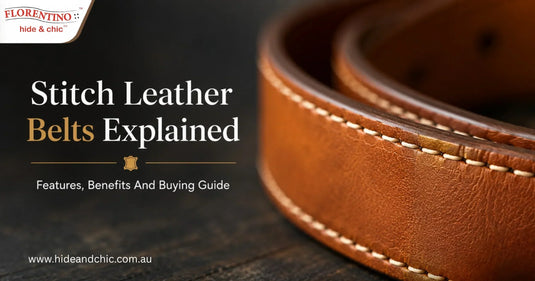
Stitch leather belts have a row of stitching running along the strap near the edge. On a lined or laminated belt that stitching is structural, holding the layers together. On a solid single-piece belt it's mainly decorative. Either way, tight, even stitching with locked-off ends is a reliable sign of careful construction. |
Pick up two belts of the same price. One is plain. One has a neat line of stitching running its length. Most people assume the stitched one is dressier, and leave it there.
It's a bit more interesting than that. On some belts that stitch line is the only thing stopping the belt coming apart. On others it's pure decoration. Knowing which is which tells you a surprising amount about what you're holding, so here's what stitch leather belts actually are, and what to check before you pay.
What Are Stitch Leather Belts?
A stitch leather belt is simply a belt with a visible row of stitching running parallel to the edge, usually a few millimetres in from it, along the full length of the strap.
The stitch might be tonal, in a thread that matches the leather so it reads as texture, or contrast, in a lighter or darker thread that deliberately draws the eye. Contrast stitching in cream or tan against dark brown is a classic look.
So far, so cosmetic. The interesting part is underneath.
Structural Or Decorative? It Depends On The Build
Belts are built in two broad ways, and the stitching means something different in each.
A single-piece belt is cut from one solid strip of hide. There are no layers to hold together, so any stitching on it is decorative. That's not a criticism. A solid full grain strap doesn't need stitching to survive, and plenty of our best belts are exactly this.
A lined or laminated belt is built from two or more layers bonded together, often a tough outer and a smoother lining. Here the stitching is doing real work. It holds those layers in place across thousands of flex cycles. Take the stitching away and you're relying on adhesive alone, which is how belts start to delaminate and gape at the edges.
Expert Insight: What Tight Stitching Actually SignalsEven on a decorative belt, the stitch line is one of the most reliable quality tells available to a buyer standing in a shop. Sewing a straight, consistent line at a fixed distance from the edge along a full metre of leather is hard, and it exposes sloppy work immediately. Wandering stitches, uneven spacing or loose thread ends mean corners were cut somewhere. This matters commercially too, because the ACCC notes that claims a business makes about a product feed directly into what a reasonable buyer can expect of its quality. |

The Benefits Of Leather Belts With Stitching
Assuming the stitching is well executed, here's what you gain.
• Layer Security: On a lined belt, stitching stops the layers separating. This is the main functional benefit and it's not a small one.
• Edge Reinforcement: A stitch line close to the edge helps the edge hold its shape and resist lifting.
• Visual Detail: Contrast stitching adds texture and interest to an otherwise plain strap, and dresses a casual belt up nicely.
• A Quality Signal: Neat stitching is difficult and slow. Its presence, done well, usually means the rest of the belt got attention too.
• Repairability: A stitched leather belt can sometimes be repaired by a leatherworker. A failed glue bond generally can't.
Men's Stitch Leather Belts: Which Style Suits You
Most men's stitch leather belts fall into three looks.
Tonal stitching on a slim strap reads formal and quiet, and works under a suit. Contrast stitching on a wider strap reads casual and deliberate, and belongs with jeans and chinos. A double stitched belt, with two parallel rows, leans rugged and workwear, and suits heavier straps built for load.
If you want one stitched belt to do everything, a tonal or subtle contrast stitch on a 35mm brown strap is the safest pick. It's smart enough for the office and relaxed enough for a weekend.
You can see the difference across our full grain leather belt range, which includes both stitched and clean-edge styles.

What To Check Before You Buy
Run through this quickly and you'll avoid nearly every stitched-belt disappointment.
• Straightness: The line should sit a consistent distance from the edge along the whole strap.
• Tension: Stitches should be snug, not loose enough to lift with a fingernail.
• The Ends: Look for locked-off or back-stitched ends, not a trailing thread.
• Thread Type: Bonded polyester or nylon thread resists abrasion far better than cotton.
• The Leather Underneath: Stitching cannot rescue poor leather. Check the grade first, then the stitch.
That last one matters most. A beautifully stitched bonded leather belt is still a bonded leather belt, and it will still peel.

Choose A Belt Built To Hold Together
Stitching is a good sign, but only on top of good leather. Every belt in our Hide & Chic range is full grain, handcrafted, and made in widths from slim dress belts to heavier everyday straps.
Call +61 2 9829 4084, email sales@hideandchic.com.au, or visit Unit 3B, 4 Louise Avenue, Ingleburn, New South Wales. Free shipping and Afterpay available, most orders dispatched within 24 to 48 hours.
FAQs About Stitch Leather Belts
Q1. Are Stitch Leather Belts Stronger Than Plain Ones?
On a lined or laminated belt, yes, because the stitching holds the layers together and stops them separating over time. On a solid single-piece belt the stitching is mostly decorative, and a plain full grain strap is already strong. Build matters more than the presence of stitching alone.
Q2. What Does Contrast Stitching Mean On A Belt?
Contrast stitching uses a thread in a deliberately different colour from the leather, for example cream thread on dark brown. It's a styling choice that adds texture and reads more casual. Tonal stitching, which matches the leather, is quieter and suits formal wear and suits better.
Q3. Can Stitching On A Leather Belt Be Repaired?
Often yes. A leatherworker can restitch a section, particularly if the leather itself is sound. That's an advantage over glued construction, where a failed bond is usually terminal. Repairability is one of the quieter reasons stitched, lined belts can outlast cheaper alternatives.
Q4. What Thread Is Best For A Leather Belt?
Bonded polyester or bonded nylon, because both resist abrasion, moisture and stretching far better than cotton. Thread type is rarely listed on a product page, so if you can handle the belt, check the stitches are snug and the ends are locked off rather than trailing loose.
Q5. Is A Double Stitched Belt Better?
Not automatically. Two parallel rows spread load and look more rugged, which suits heavier workwear straps. On a slim dress belt double stitching would look wrong and add nothing. Choose the stitch style that matches the belt's job, not the one with the most thread.
Q6. Do Stitched Belts Suit Formal Wear?
Yes, provided the stitching is tonal and the strap is slim, around 28 to 32mm. That combination reads as texture rather than decoration and sits comfortably under a suit. Save wide straps with bold contrast stitching for jeans, chinos and casual outfits.