A belt is rarely just a functional accessory. In the hands of someone who knows what they are doing, it is a finishing statement, a quiet signal of taste and attention to detail.
But with so many types of leather belts available today, choosing the right one can feel overwhelming. Should you go for full-grain or top-grain? Formal or casual? A minimalist buckle or something with more personality?
Whether you are a style-conscious individual building a wardrobe, a retailer looking to stock the best quality leather belts, or a wholesaler sourcing for premium clientele, this guide cuts through the noise and gives you everything you need to make the right choice with confidence.
What Are the Main Types of Leather Belts?
If you are looking for a quick, clear answer before diving deeper, here it is:
-
Full-grain leather belts are the highest quality option, made from the top layer of the hide and designed to develop a rich patina over years of daily use.
-
Top grain leather belts offer a refined, smooth finish ideal for formal and smart-casual styles, making them a practical choice for professional wardrobes.
-
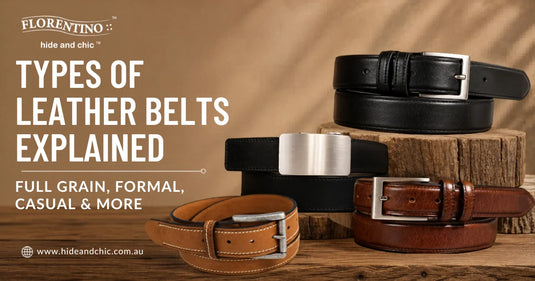
Formal dress belts are narrow and sleek, crafted for pairing with suits and dress trousers, and should always match your footwear in colour and finish.
-
Casual leather belts are wider, more textured, and more expressive in design, making them ideal for everyday wear with denim and relaxed tailoring.
-
Western and tooled belts are crafted from thick, full-grain leather and feature hand-carved or embossed designs that reflect traditional leather craftsmanship.
-
Designer leather belts combine premium materials with distinctive hardware and branding, offering a luxury finish for those who treat their accessories as investments.
Understanding these categories helps you shop smarter, whether you are purchasing for yourself or sourcing leather belt types for a retail collection.
Why Leather Belt Quality Starts with the Hide
The quality of the hide, the part of the hide used, and the tanning method employed together determine durability, texture, ageing behaviour, and ultimately the value you get over years of wear.
Before understanding leather belt types, you need to understand what makes one belt genuinely superior to another. It all starts with the leather itself.
Not all leather is created equal. The same animal hide can yield vastly different products depending on where it is cut and how it is processed. This is the foundation of every quality conversation in the leather industry.
Understanding Leather Grades Before You Buy a Belt
Full-grain leather is sourced from the outermost layer of the hide and retains the full natural grain, including all its inherent markings and texture. It is the most durable and the highest-grade available. Over time, it develops a rich patina that makes every belt unique to its owner. This is the material behind every conversation about the best full-grain leather belts.
Top-grain leather is sanded or buffed to remove surface imperfections, resulting in a cleaner, more uniform appearance. It is slightly thinner and more pliable than full-grain, making it well-suited for fashion-forward designs. It is still genuine, high-quality leather, just treated differently.
The term "genuine leather" often misleads consumers. In the full-grain vs. genuine leather belt debate, genuine leather sits several grades below full-grain. It is made from leftover layers of hide after the top is stripped away, then treated with dyes and finishes to mimic better grades. It wears out faster and lacks the character of full grain. For buyers seeking the best quality leather belts, understanding this distinction is non-negotiable.
Bonded leather is the entry-level of the spectrum, composed of shredded leather scraps bound together with adhesive. It looks like leather on the surface, but it deteriorates quickly with regular wear. Avoid it if longevity and value are your criteria.
7 Different Types of Leather Belts Every Wardrobe Should Know

Now that the leather hierarchy is clear, here is a practical look at the core types of leather belts by design, purpose, and occasion.
1. Formal Dress Belts
Formal vs casual leather belts is a distinction every well-dressed person should understand instinctively.
The best formal belts are narrow, typically 25-32 mm wide, crafted from smooth or patent leather, and feature a slim, polished buckle. They are designed to pair seamlessly with dress trousers and suits, where the belt should complement rather than compete.
Colour choices for formal belts follow a simple rule: match your shoes. Black leather belt with black Oxfords, tan or brown with brown Derby shoes. The finish should be clean and understated, with minimal or invisible stitching.
Brands committed to genuine leather craftsmanship ensure that formal belts carry a smooth, consistent surface that holds its polish through extended wear.
2. Casual Leather Belts
Casual leather belts tend to be wider, between 35 mm and 45 mm, with visible stitching, distressed finishes, or textured surfaces. They pair well with denim, chinos, and relaxed tailoring. The beauty of a casual leather belt is that it invites personality. Buckle shapes can be more expressive, including double rings, O-rings, or statement metal hardware.
3. Reversible Leather Belts
Reversible leather belts offer two colour options in one belt, typically black on one side and tan or brown on the other. They are a practical choice for travellers and those who prefer a streamlined wardrobe. While they may not match the luxury feel of a dedicated full-grain piece, reversible belts crafted from top-grain leather are a solid option for everyday wear.
4. Western and Tooled Leather Belts
A staple of American heritage fashion, western belts are wide and often feature intricate hand-tooled or embossed designs. They reflect traditional leather artisanship and are made almost exclusively from thick, full-grain leather that can withstand the intricate carving process.
5. Braided Leather Belts
Braided leather belts are crafted by weaving multiple strips of leather together, creating a textured, flexible band. They work exceptionally well with summer looks and open-toe footwear. Their woven structure also provides a degree of natural stretch, offering a comfortable fit without size-dependent sizing.
6. Garrison and Military Belts
Drawing from military heritage, garrison belts are wide, utilitarian, and built to last. Typically 45 mm wide and constructed from thick full-grain leather, they feature a sturdy rectangular or box buckle. They pair well with workwear, cargo trousers, and utility-influenced fashion.
7. Designer Leather Belts
Designer leather belts occupy the luxury end of the market, where the hardware becomes as much a signature as the leather itself. Logo buckles, monogrammed leather, and exclusive colour ways define this category. While heritage fashion houses drive much of the demand, independent leather brands offering genuine craftsmanship and distinctive designs are increasingly popular among consumers who want quality without the inflated brand premium.
For those who want to buy leather belts online at a designer level without compromising on material integrity, the key is to look for brands that are transparent about their leather sourcing, tanning method, and hardware quality.
Full Grain vs Genuine Leather Belt: Which Is Worth Your Money?
This is one of the most searched questions in leather belt types research, and the answer is straightforward once you understand what you are comparing. The full-grain vs. genuine leather belt debate is really a conversation about longevity versus cost.
A full-grain leather belt will cost more upfront. But it will also last many times longer, develop a beautiful patina, and hold its structure across years of wear. A genuine leather belt may look comparable on the rack, but it will begin to crack, peel, or delaminate much sooner. When you calculate the cost per year of use, full grain almost always wins.
For buyers serious about the best quality leather belts, full-grain is the benchmark. It is what separates a belt you buy once from a belt you replace constantly. Premium brands like Hide & Chic are built on this principle, using genuine, high-grade leather that rewards the investment.
4 Expert Tips for Choosing the Perfect Leather Belt for Your Wardrobe

The right belt does not just hold your trousers up. It anchors your entire look. Here is how to think about the selection process.
1. Match Width to Trouser Style
Belt width should correspond with the size of the belt loops on your trousers. Formal dress trousers have narrow loops that require a belt under 32 mm. Casual jeans and chinos typically accommodate 35 mm to 45 mm belts. Getting this proportionality right is one of the small details that separates a well-assembled outfit from an afterthought.
2. Coordinate with Footwear
The classic rule is to match your belt to your shoes in both colour and finish. Matte belt with matte shoes, polished belt with polished shoes. This is more relevant for formal wear. Casual outfits allow more creative latitude, where a contrast between your belt and shoes can be an intentional style choice.
3. Consider Buckle Style
Buckle style has a significant impact on the overall aesthetic. Frame buckles with a single prong are the most versatile and work across both formal and casual contexts. Plate buckles have a flat, frameless design that suits slim, minimal belts. Box frame buckles are bolder and work well with casual and workwear styling. Double-ring buckles and O-ring buckles carry a bohemian or retro edge.
4. Invest in Leather That Ages Well
If longevity matters to you, opt for vegetable-tanned leather or full-grain leather. Both develop character over time rather than deteriorating. Chrome-tanned leather is softer and more uniform, but does not age the same way. Understanding tanning methods helps you choose a belt that fits not just your current style but your long-term wardrobe goals.
Formal vs Casual Leather Belts: Getting the Balance Right
The formal vs casual leather belts distinction is not just about width or finish. It is about context, intention, and the message your outfit sends. A beautifully crafted formal belt worn with jeans looks out of place. Equally, a chunky braided belt under a suit undermines the whole silhouette.
The smartest wardrobe approach is to own at least one belt from each category: a slim black formal belt in polished full grain for professional settings, and a medium-width brown or tan casual belt in a more textured or aged finish for weekend and smart-casual occasions. From there, the collection can expand based on personal style preferences.
The best formal belts are defined by restraint: no visible stitching on the front face, a slim single-prong or plate buckle, and a consistent, unblemished surface. The best casual leather belts are defined by character: visible hand-stitching, natural grain texture, interesting hardware, and a finish that tells a story.
4 Step Leather Belt Buying Guide for Retailers and Wholesalers

For retailers and B2B buyers, sourcing the right leather belt types is a different kind of decision. You are not just buying for yourself; you are curating for a customer base with diverse needs and expectations. Here is what to prioritise when sourcing the best quality leather belts at scale.
1. Prioritise Material Transparency
Every reputable leather supplier should be able to tell you exactly what grade of leather is being used, which part of the hide it comes from, and what tanning process was applied. If a supplier is vague about leather grade or hides behind marketing language like 'genuine leather' as a premium claim, that is a signal to look elsewhere.
2. Range Across Price Points and Occasions
A strong wholesale leather belt collection should span formal and casual styles, offer options in both full-grain and top-grain leather, and cover a range of buckle styles. This ensures you can serve both the entry-level buyer and the customer investing in a premium piece.
3. Ensure Sustainable Leather Sourcing
Sustainable fashion is no longer a niche conversation. Consumers are increasingly asking where their leather comes from and how it was processed. Brands committed to ethical leather sourcing and responsible tanning practices are better positioned to build long-term customer trust. When you partner with a brand that takes sustainability seriously, you inherit that credibility in your own retail positioning.
4. Check For Consistency in Craftsmanship
Wholesale buyers need to trust that every unit in a batch meets the same standard as the sample. Look for partners with robust quality control processes, with consistent stitching, hardware finishing, and leather treatment across all units.
3 Step Care Routine for Your Leather Belt to Make It Last
A full-grain leather belt is an investment, and like any investment, it rewards care. Proper maintenance dramatically extends a belt's life and preserves its patina.
-
Conditioning is the most important step. Apply a leather conditioner every few months to prevent the leather from drying out and cracking. A dry belt loses suppleness and begins to crack at stress points, such as the belt holes. Use a conditioner matched to your leather type, as some formulas are designed specifically for vegetable-tanned or chrome-tanned leather.
-
Cleaning should be done with a soft, slightly damp cloth to remove surface dust and oils. Avoid soaking the belt in water or using chemical cleaners, as they strip the leather's natural oils and accelerate deterioration.
-
Storage matters more than most people realise. Hang your belt or roll it loosely rather than folding it, which creates creases over time. Keep it away from direct sunlight and heat sources, as they can dry leather out quickly. A dedicated belt roll or hanging organiser is a worthwhile addition to any wardrobe.
The Final Word on the Right Types of Leather Belts for Long-Term Value
Understanding the types of leather belts available to you transforms what might seem like a simple purchase into a considered, rewarding decision. The difference between a belt that lasts a season and one that becomes a wardrobe staple often comes down to leather grade, construction, and the brand's commitment to honest craftsmanship.
Whether you are shopping for yourself, advising customers, or sourcing at wholesale volume, the principles remain the same: choose quality, choose transparency, and choose a belt that earns its place in a well-considered wardrobe.
Explore the Hide & Chic collection today, or reach out directly to discuss wholesale partnership opportunities. Quality leather should not be a compromise.
Why Buy Leather Belts Online from a Trusted Brand
The decision to buy leather belts online comes with both advantages and risks. The advantage is access to a far wider range of styles, grades, and price points than any physical store can offer. The risk is being misled by product descriptions that use aspirational language but fail to deliver on the material quality promised.
The safest approach is to shop from brands that are genuinely transparent about what they sell. Look for clear descriptions of leather grade, tanning method, hardware material, and country of origin. Brands that take the time to educate their customers are the same brands that stand behind their products.
Why Choose Hide & Chic’s Premium Leather Belts?

At Hide & Chic, every product description is built on honesty. When a belt is described as full-grain leather, that is precisely what it is. Every belt in the collection reflects a commitment to genuine materials, thoughtful design, and construction that holds up over time.
From the best full-grain leather belts for formal occasions to expressive casual designs for everyday wear, the range covers every category without compromising on the standard that defines the brand.
For wholesale buyers, this transparency extends to bulk sourcing, with clear grade and specification documentation available on request.
Whether you are a boutique retailer building a curated accessories section or a larger operation seeking consistent volume at a premium grade, the partnership model is built to support your goals.
Frequently Asked Questions About Types of Leather Belts
1. How do I know if a leather belt is full-grain or genuine leather before buying online?
Look closely at the product description. A reputable brand will state the leather grade explicitly as full grain, top grain, or genuine leather, not just the vague word 'leather.' Check for descriptions that mention the natural grain, the tanning method, and whether the belt will develop a patina with wear. If none of this information is present, that absence itself is informative. Full-grain leather is almost always called out as a selling point because it is the premium tier.
2. What width leather belt should I wear with jeans versus suit trousers?
For suit trousers and formal trousers, stick to a belt between 25 mm and 32 mm wide. The narrower profile complements slim belt loops and keeps the overall look refined. For jeans and casual trousers, a belt between 35 mm and 45 mm is appropriate and proportional. The loop size on your trousers is the simplest guide: if a belt fits through the loops without forcing, the width is correct for that garment.
3. Is vegetable-tanned leather better than chrome-tanned leather for belts?
Both have their strengths, and the choice depends on your priorities. Vegetable-tanned leather is processed using natural tannins from plant sources and is known for its firmness, longevity, and ability to develop a rich, personalised patina. It is the traditional choice and preferred by those who value natural ageing. Chrome-tanned leather is processed more quickly with chromium salts, resulting in softer, more uniform leather with a wider range of colours. It is more water-resistant and better suited to fashion-focused designs where finish consistency matters more than patina.
4. Can I buy leather belts wholesale without meeting a minimum order quantity?
Minimum order quantities vary significantly between suppliers. Some premium brands offer flexible wholesale terms to accommodate boutique retailers or those starting a new accessories line. When approaching a wholesale partner, it is worth explicitly asking about tiered pricing structures, trial orders, and the documentation available for product specifications and leather grading. Partners committed to building long-term relationships are more likely to accommodate smaller initial orders in exchange for ongoing business.
5. How many leather belts should a well-built wardrobe have?
A practical, well-rounded wardrobe needs at minimum three leather belts: one slim black formal belt for professional and evening occasions, one medium-width brown or tan casual belt for everyday wear, and one versatile reversible or neutral belt for travel. From there, additions should be driven by your actual wearing frequency and style range. A western or statement belt makes sense if you gravitate toward casual or heritage aesthetics. A second formal belt in a tan shade broadens your formal range without significant wardrobe space.